

The man behind the camera
On the 30-year anniversary of his passing, a look at my father

Editor’s note: This is the first of a two-part series. I know last week’s was a two-parter, too, and I’m not going to make this a habit. But as I started telling the story of my father, I found it impossible to explain him, and my relationship to him, in one column. Part II will post Friday.
SMOKE FROM a barbecue mingled with the ponderosa pines, flavoring the summer air with that “livin’-is-easy” aroma. It was a warm August evening in 1996 and our family lingered on the deck of a Black Butte Ranch home we were renting.
It was time to end an almost-perfect weekend. Time to conclude a celebration of my parents’ 50th wedding anniversary. Time for most of us to leave for our homes in the Willamette Valley.
We had spent two days leafing through a surprise memory book we had compiled for Mom and Dad — well-wishes, photos and remember-the-time stories from their friends, some of whom they had known for seven decades.
We had dined together, watched old family videos together, had our photos taken together. Now, on this final night, my father unabashedly bragged to his brother about my 14-year-old son Jason’s abilities at shortstop: “He’s like a vacuum cleaner out there, Bill.”
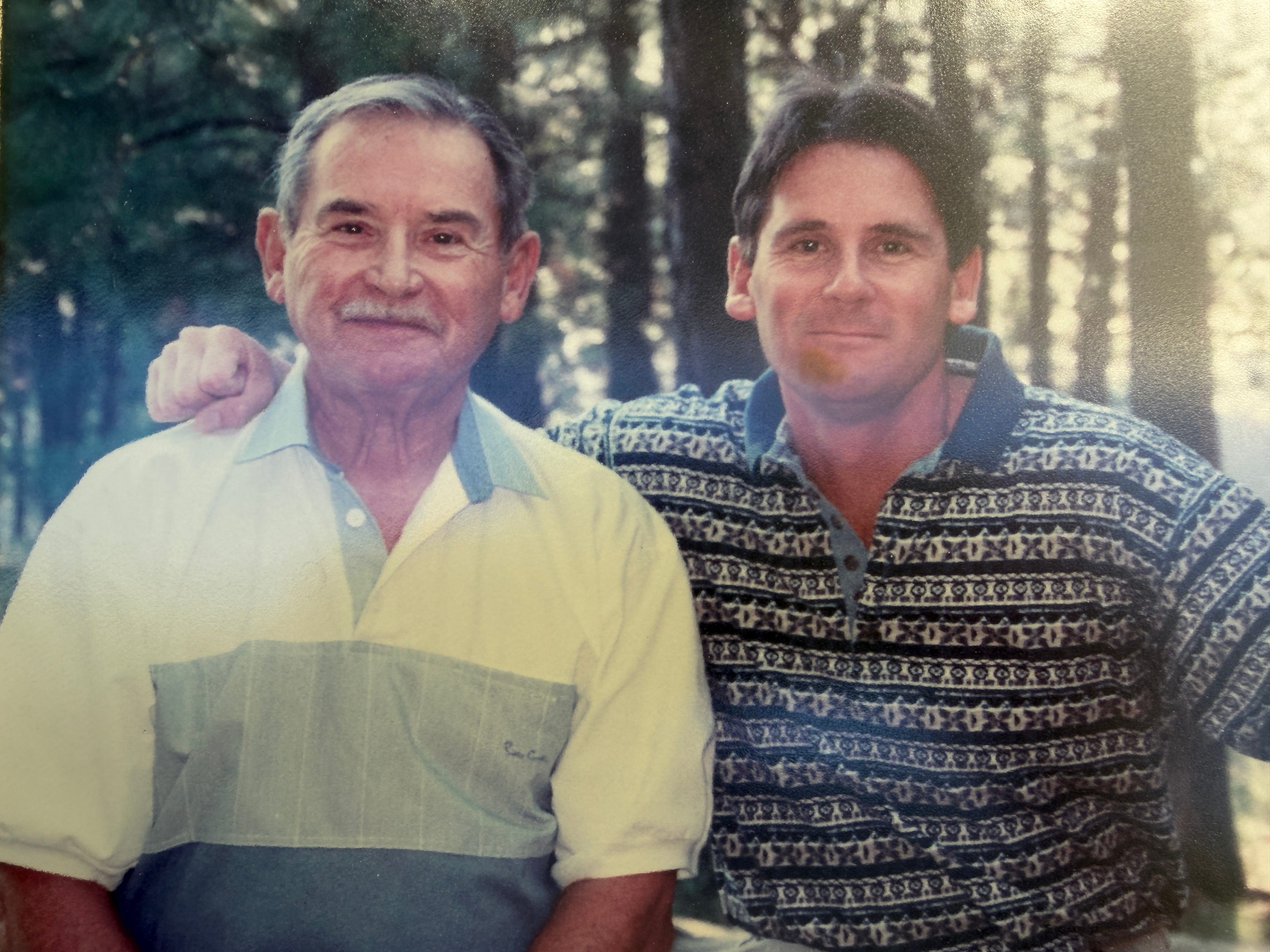
Later, I saw Dad sitting alone on a wooden bench and handed Sally, my wife, a camera.
“Here,” I said, “how many chances does a guy get to have his picture taken with his dad in a beautiful setting like this?”
I put my arm around him. We beamed twin smiles, and my wife snapped the best photo — and one of the few — ever taken of just the two of us.
Two days later, still at Black Butte, he died unexpectedly of congestive heart failure.
That was 30 years ago today.
I was 42. Today, I am 72, the same age my father was when he died.
Since beginning this Heart, Humor & Hope column two and a half years ago, I’ve written plenty about my mother but, a reader recently reminded me, hardly anything about my father.
So today, let me tell you about Warren Welch — in hopes you, too, will remember a father who wasn’t perfect but pretty darn good.
Warren Welch loved fishing (fly-fishing in particular), photography and his family. He loved building boats, tinkering with cameras, watching “Get Smart” on TV — “Missed it by that much” — and backpacking into Oregon’s high-mountain lakes.
In fact, not long after he had heart-bypass surgery by a doctor so young we called him “Doogie Howser,” he said, “Bob, when it’s my time to go, I might just hike into some high-mountain lake and let winter take me home.”
I mentioned that to my mother, Marolyn, as I drove her home to Corvallis from the refined resort where, only hours earlier, Dad had died.
“Yes, I do remember him saying that,” she said. “Black Butte does have a couple of fly-fishing ponds. Maybe he just decided to take the deluxe route.”
He would have loved that line. He had a great sense of humor, the youthful version tinged with a serious sense of mischief inherited from his father, the former editor of a neighborhood newspaper he founded, called The Hooligan Gazette.
My father was born in 1923 and grew up in northeast Portland. In the late 1930s, The Oregonian published an article headlined, “Woman Screams; Cops Seek Body.” It described what five witnesses believed to be a possible murder, an apparent tossing of a woman into the Willamette River. Or so it seemed. In fact, it was all a put-on concocted by my dad and his buddies.
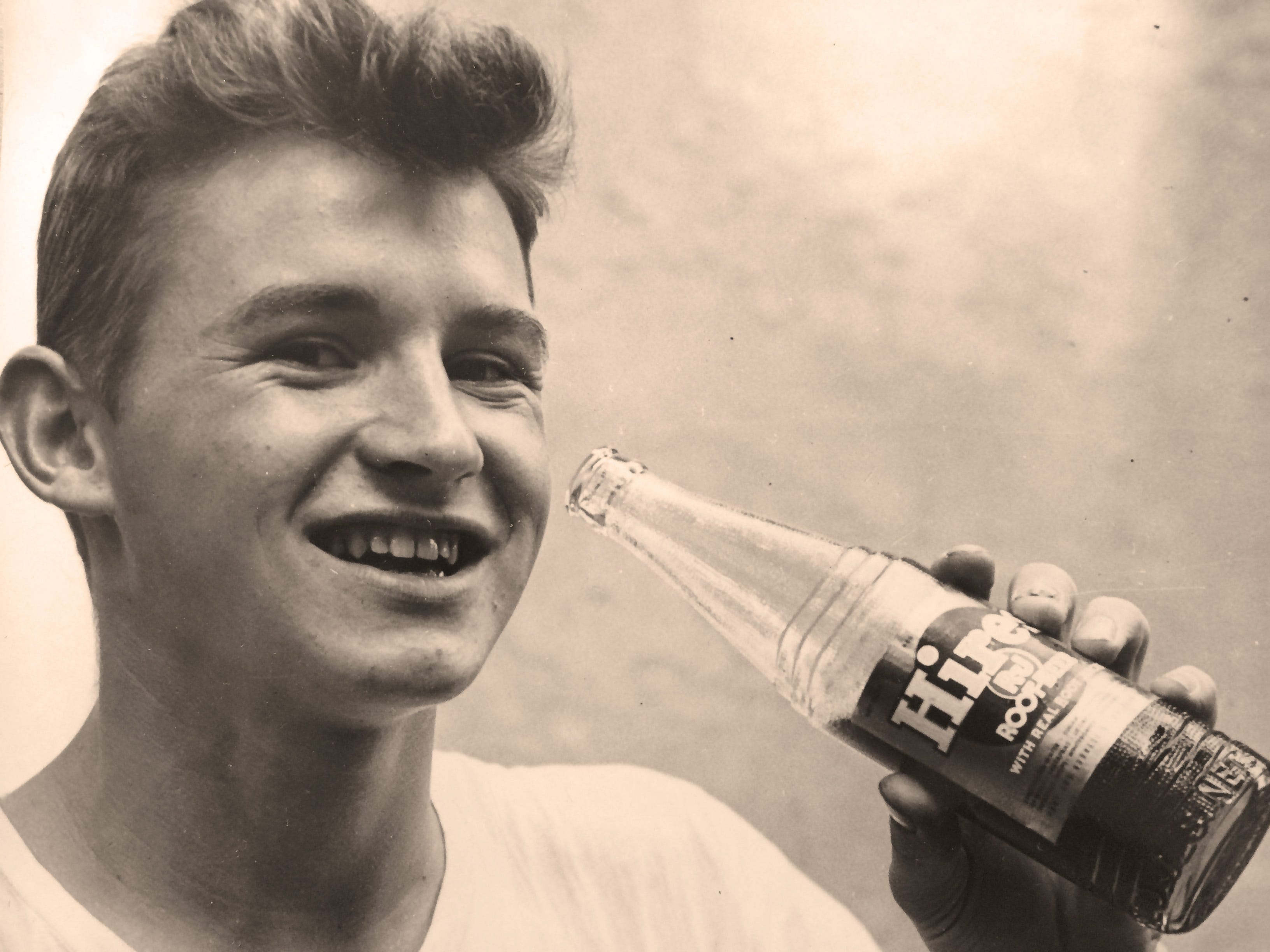
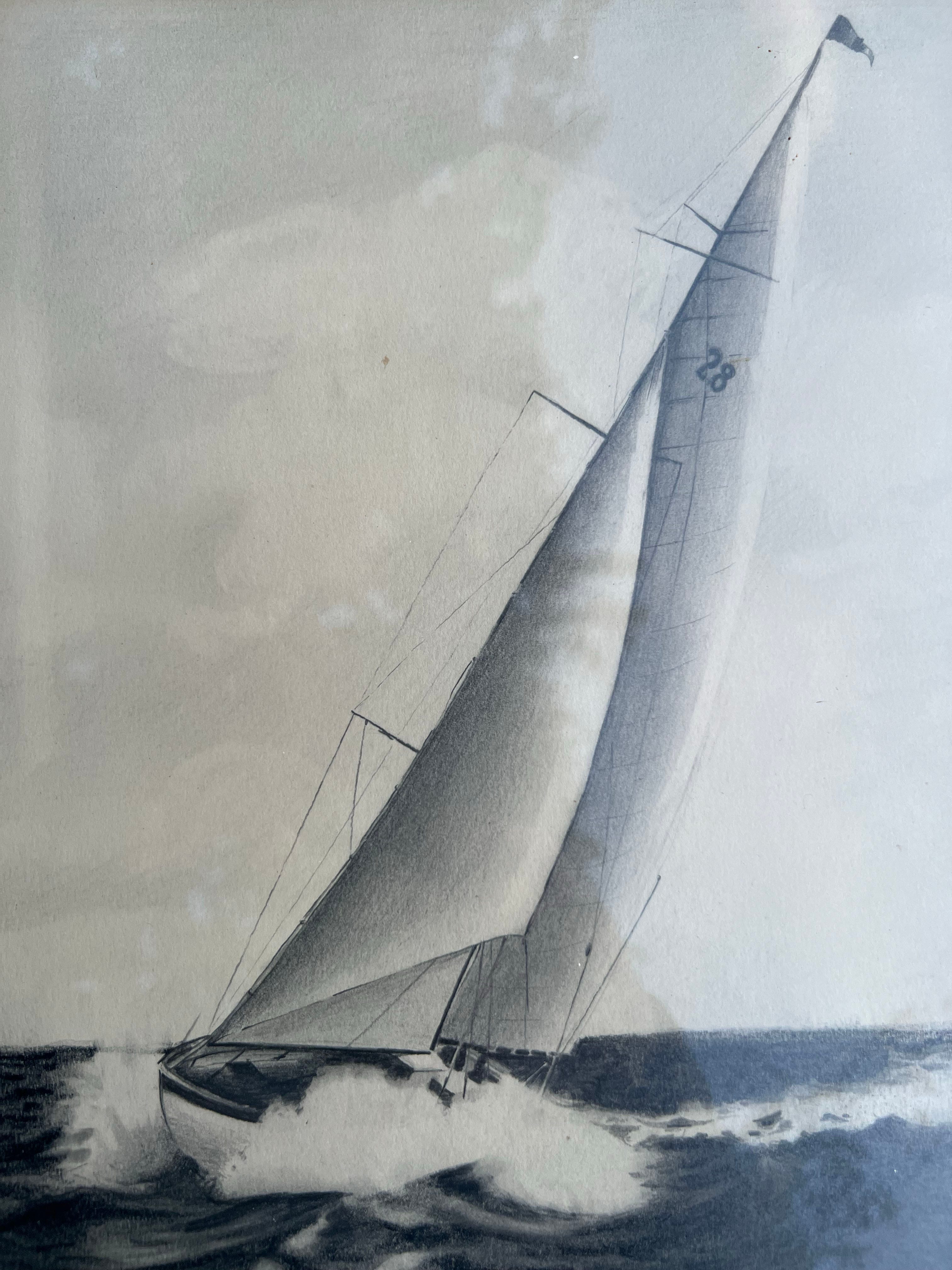
By age 12, he was so smitten with photography that he turned a bedroom closet into a darkroom. He made his own pinhole cameras. Like his father, he also had a fondness for sketching.
He attended Grant High School in Portland, graduating in 1942.
My dad was never a star student or stud athlete; his notoriety came from less-noble endeavors, such as accidentally ramming his bicycle into the back of a parked car, flying over the top, and finding himself staring through the front windshield at a police officer.
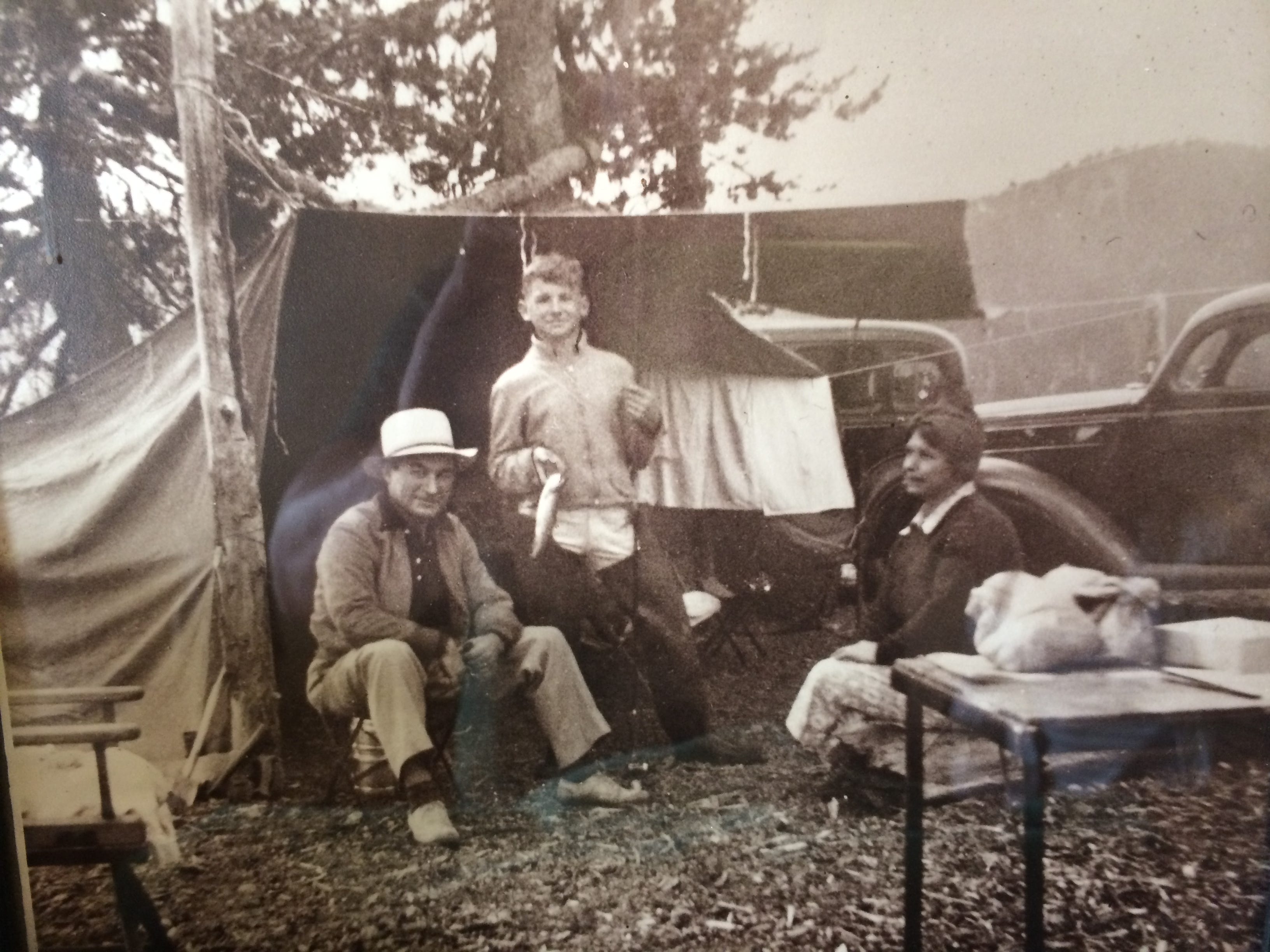
He and his buddies would hitchhike east up the Columbia Gorge. They’d backpack 10 miles into Wahtum Lake, fish, then backpack out and hitch home. (It’s no coincidence that my dad often read us aloud favorite parts of books by Spokane author Patrick F. McManus. McManus’ hilariously hyperbolic stories of fishing and hunting adventures were seemingly written about a young Warren Welch.)
In the summer of ’42, after graduation, he moved to Corvallis to attend what was then Oregon State College. One September evening before classes had started, he and some pals showed up at a Corvallis High School dance. He was at the drinking fountain near the school gym when he saw her: a young woman, a mere sophomore, who seemed to be the human incarnation of the words of “At Last,” a just-out Glenn Miller song the band was playing: “You smiled and then the spell was cast.”
He smiled at her. She smiled at him. They danced. They fell in love.
But World War II raged beyond; he quit school to join the Navy. She waited for him until the war ended and he was honorably discharged, taking a train to San Diego with her future mother-in-law to reunite with him.
He proposed in Los Angeles’ Griffin Park. They were married on August 11, 1946 — 90 years ago Tuesday.
He spent a lifetime trying to quit smoking, first Lucky Strikes, then a pipe.
He was not a man of deep religious conviction; at my mother’s leading, we attended a Methodist church early in my life, then the Episcopal Church. “Once I got off that ship in Bremerton after World War II,” he said, “I felt everything beyond that was gravy.” Who needed God?
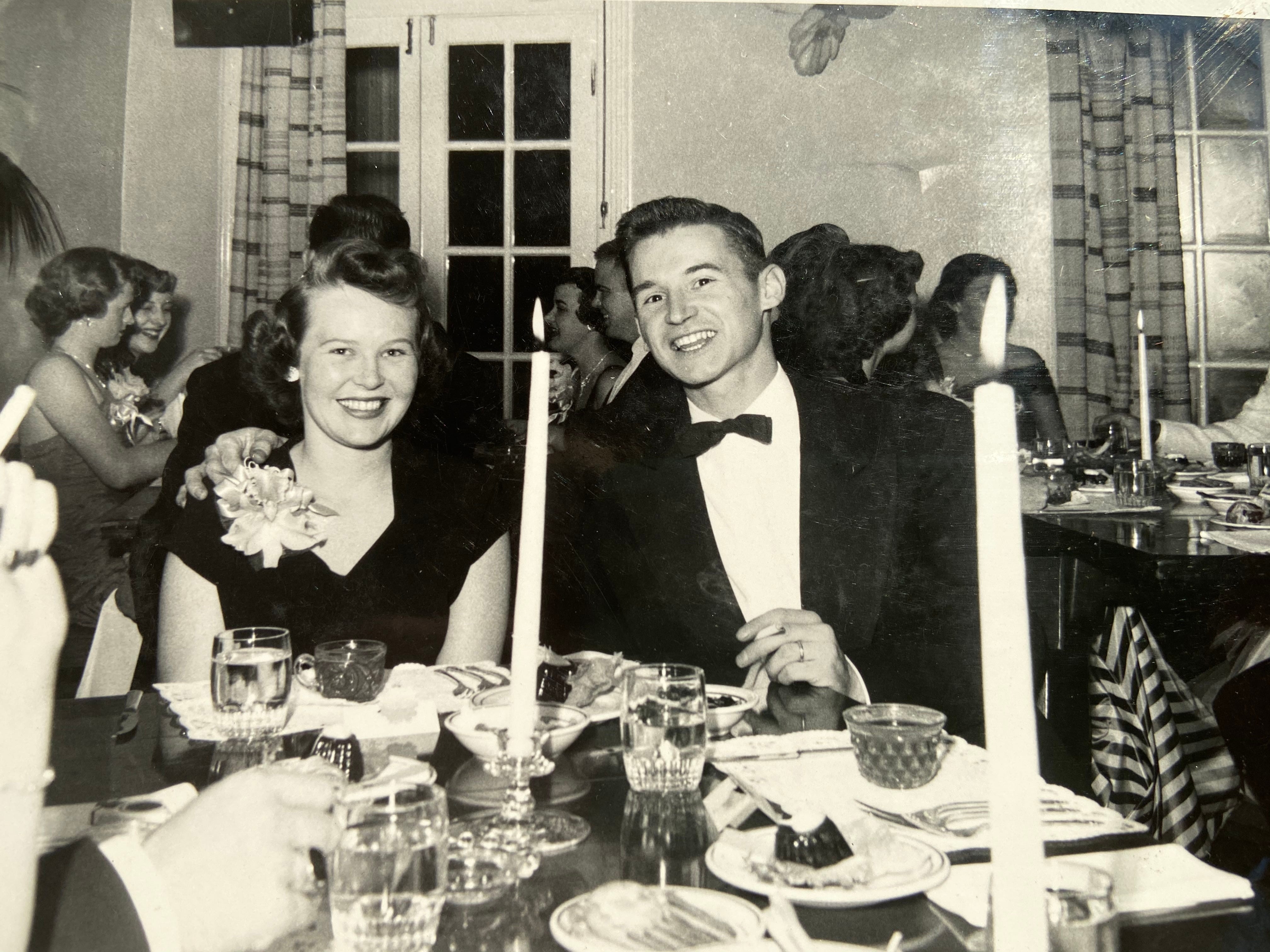
He was independent, artistic, adventurous and ingenious. He never made much money, nor did any of us seem to notice, or care. After working for a local photo studio, he ventured out on his own with a rented darkroom in the basement of a house east of the Oregon State campus.
He took wedding photos, graduation photos, and eventually OSU sorority and fraternity dance photos. As teenagers, my sister and I made $1 an hour placing the just-developed 8x10s on a Hula Hoop-sized dryer in our basement.
He also had stints as manager of the photo department at the Oregon State Book Store — it was so cool to visit him there — and making training films for the Oregon State Board of Higher Education.
For most of a decade, he worked on a film called Trout in the High Country, based on his forays into the high Cascades to fish. When he needed a way to lug his heavy camera up the trail, he and friend Gene Wellman built what amounted to a giant wheelbarrow with a bicycle wheel in the middle. When he wanted to film fish underwater, he built an underwater casing for his camera, well fiberglassed to prevent leakage. It worked amazingly well.
He later got into boat building. When I was five or six, I was enamored by the scale-model balsa wood ship he’d built to replicate the vessel he’d been on in World War II. (He was en route to Japan, assigned to pilot a landing craft for the planned invasion, when the war ended with the bombing of Nagasaki and Hiroshima in August 1945.)
When I was about 10, he bought a kit for a 14-foot Dillabough and, in our single-car garage in Draper Court, built a speedboat to which he affixed a burgundy-and-white Johnson 35-horse outboard. We waterskied with it for a decade, at Detroit Reservoir, Suttle Lake and Cultus Lake.
He created his own sailboat class, the Sandpiper, and built a handful of fiberglass boats from his mold that he sold to others.
When he decided he wanted a 19-foot boat to be longer, he concocted a way to add two feet to it. I have no idea how. My dad was a wonder at improvisation. When I got my Tudor Tru-Action football set, he created custom goal posts — the single-post kind, not the dorky “H” kind — using coat hangers and electrical tape, the latter to represent padding that protects players from injuries.
When it came to fishing, he seemed to have a sixth sense. I remember a night on Gold Lake, on the Willamette Pass, when he and I were fishing from the same row boat using the same weight fly line and the same kind of fly. He limited out. I didn’t catch a fish.
In many ways, he was a loner. The guy behind the camera but rarely in the photographs themselves. He had friends he fished with, but he didn’t meet buddies for coffee. He wasn’t a joiner. When we’d go to the coast, by the time we’d get down on the beach he’d be on his way to fish for steelhead on the Yachats River.
Mom tacked a cartoon on the refrigerator that stayed for years. It showed a sketch of a lone man roasting a hot dog over a fire. The caption she had penciled in? “Warren Welch, self-employed, holds company picnic.”
Not that he was a recluse — at least at first. Once, when we arrived at his folks’ cabin south of Cannon Beach, we forgot the key. While we waited for someone to rescue us with a backup key, he got in front of the car and had my mother flash the headlights on and off, acting like a monster readying to attack us amid the flickering lights.
He loved corny humor; his favorite joke was about an ice fisherman who, when asked how come he was catching fish when nobody else was, spit something out of his mouth. “Ya gotta keep your worms warm.”
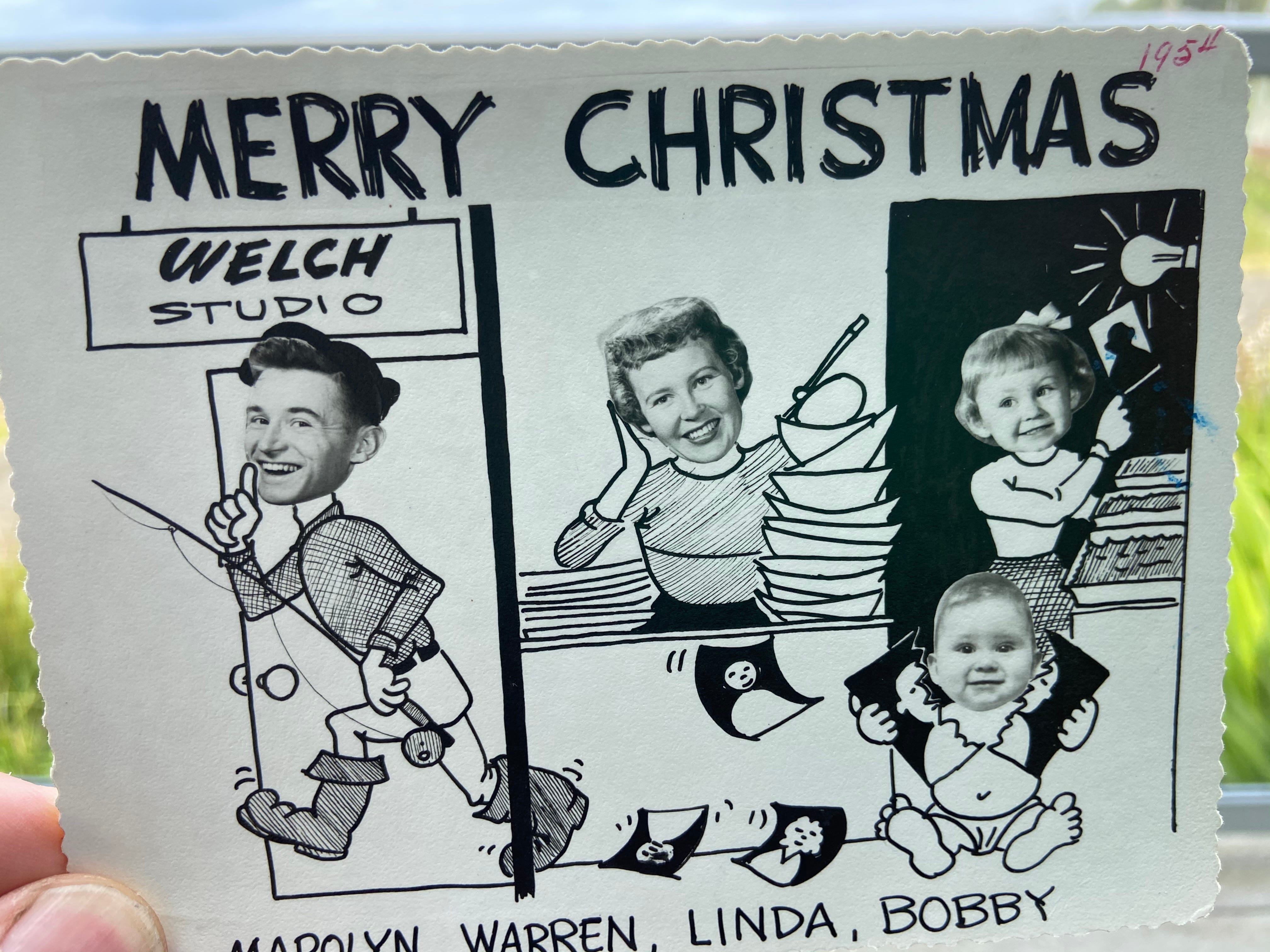
He created a humorous family Christmas card each year.
When he took photos of a fraternity ski weekend at Hoodoo Ski Bowl, our family got to stay at the lodge and ski under the stars.
On Sunday nights, before we watched “Lassie,” he’d play knee football with me in the living room. I’d charge for the goal line — the sofa — and each time he’d repel me, his arms like giant pinball flippers.
He built me an eight-foot sailboat that we later hung a three-horse Johnson motor on. I could take it anywhere in the lake as long as I wore a flotation device.
I only remember him yelling at me once: when, as a senior in high school, I’d invited five friends to spend the weekend with Mom and Dad at our family’s cabin in Yachats — and, upstairs, we were still making a ruckus at 3 a.m.
My sister, the would-be folksinger, and I, the would-be surfer, were the only kids on the block whose father, in the late 1960s, created and edited movies of his kids, complete with musical soundtracks. (Linda’s movie — of her running, in slow motion, across a flowered field) was accompanied by “Wild Mountain Thyme.” My sports-and-skim boarding clips were choreographed to a Beach Boys medley.)
But then came the political, social and, for us, personal upheaval of the 1960s and 1970s. And my father’s simple world of fishing, family and boats became far more complicated.
Friday: Part II.
Photos/videos of the week
Reading about your dad i really now know where you got your sense of adventure and fun. What a wonderful childhood you had to create such an amazing human being!
Reading about your dad's photography business, it wrung a bell with my wife. He provided our fraternity/sorority house dance photos at OSU (Tri Delta and Theta Chi 70-74). Looking back at some of those, he must have been very tolerant and patient to take some of those photos.